
Flu Vaccinations in Bedford, TX: Protect Your Family This Flu Season
Flu season is approaching, and getting flu vaccinations in Bedford, TX is one of the simplest ways to protect yourself and your loved ones from a virus that sends hundreds of thousands of Americans to the hospital every year. As a trusted primary care clinic serving Bedford, Dallas, and the greater Fort Worth Metroplex, Preferred Primary Care (PPC) wants families across DFW to head into fall prepared, informed, and protected.
Why Flu Vaccinations in Bedford, TX Matter This Season
Influenza is far more than a bad cold. Each year, the flu results in millions of illnesses and a significant burden on hospitals nationwide. During the 2025–2026 season alone, U.S. health officials estimated between 31 million and 54 million flu illnesses, 14 million to 24 million medical visits, and hundreds of thousands of hospitalizations. Flu-related deaths that season ranged into the tens of thousands.
For the upcoming season, health officials have taken new steps to keep pace with the virus. All three components of the seasonal flu vaccine were updated for 2026–2027, including a change designed to protect against the influenza A(H3N2) subclade K virus that circulated widely during the previous season. This yearly updating is exactly why a new flu vaccination is recommended every season, even for people who were vaccinated last year.
A few key facts underscore why timely vaccination matters:
- Flu activity in the U.S. typically begins in October, peaks between December and February, and can extend into May, so early vaccination gives the immune system time to build protection before community spread picks up.
- Vaccine effectiveness and formulation are reassessed annually based on global surveillance, meaning last season’s shot does not carry over protection into this one.
- Certain groups, including young children, older adults, pregnant women, and people with chronic conditions, face a higher risk of severe complications from the flu.
Understanding the Flu: A Brief Overview
Influenza is a contagious respiratory illness caused by influenza viruses that infect the nose, throat, and sometimes the lungs. It spreads primarily through respiratory droplets when an infected person coughs, sneezes, or talks, and it can also spread by touching a contaminated surface and then the face.
Symptoms often appear suddenly and can include fever or chills, cough, sore throat, runny or stuffy nose, muscle or body aches, headaches, and fatigue. Some people, especially children, may also experience vomiting or diarrhea. While many cases resolve at home with rest and fluids, the flu can lead to serious complications such as pneumonia, dehydration, or worsening of chronic conditions like asthma, diabetes, or heart disease.
Seek emergency medical attention if you or a family member experiences difficulty breathing, persistent chest pain or pressure, confusion, severe or persistent vomiting, or symptoms that improve and then return with fever and worse cough.
Why Flu Spreads So Easily in Bedford, TX: The Science Behind Infection
Bedford’s winters are exactly the kind of environment influenza thrives in. As DFW temperatures drop and humidity falls in late fall and winter, the air becomes drier, and dry air is known to help flu virus particles stay suspended and infectious for longer after a cough or sneeze. At the same time, colder weather pushes more of daily life indoors, into offices, schools, and family gatherings where windows stay closed and air recirculates through HVAC systems. That combination of dry air and closer indoor contact is a major reason flu cases in North Texas climb sharply from late fall through winter, even though the virus itself is present year-round.
But the real story of why the flu spreads, and why it makes people sick, happens at a molecular level. The influenza virus is a tiny particle covered in two key proteins: hemagglutinin (HA) and neuraminidase (NA). HA acts like a key, binding to sialic acid receptors that sit on the surface of the cells lining the nose, throat, and airways. Once HA locks onto a receptor, the virus is pulled inside the cell, where it hijacks the cell’s own machinery to make copies of itself. Influenza carries its genetic material as RNA rather than DNA, and it uses an enzyme called RNA-dependent RNA polymerase to replicate that genome at a rapid pace. This copying process is notoriously error-prone, which means every new generation of virus carries small mutations.
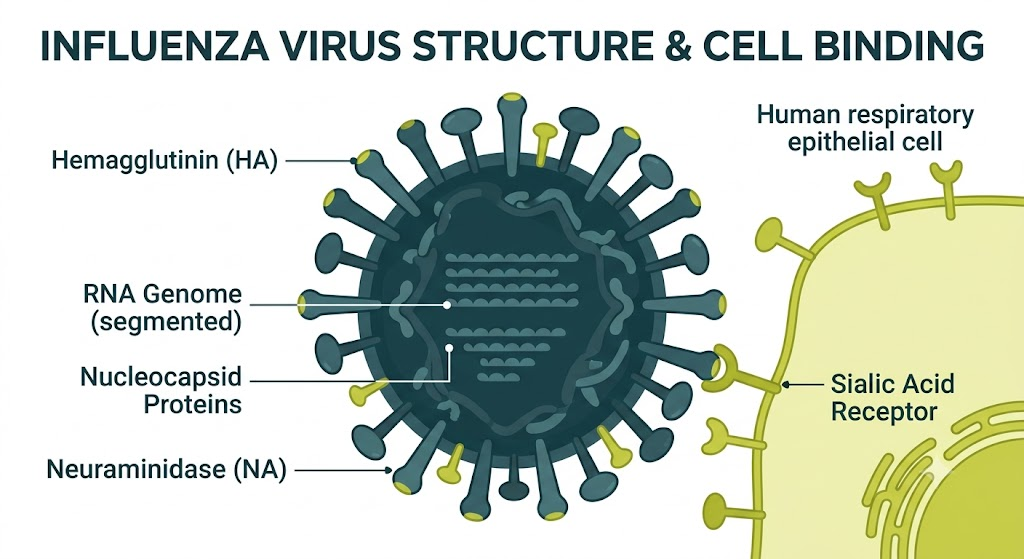
Those mutations matter enormously. When enough of them accumulate in the HA and NA proteins, a process called antigenic drift, the virus starts to look different from the strains circulating in previous years. That’s precisely why scientists update the flu vaccine every single season. It’s also why, when a completely new strain suddenly emerges, such as the H3N2 subclade K variant identified this year, health officials have to move quickly to update vaccine formulations before the season begins.
Once a cell has produced thousands of new virus copies, the second protein, neuraminidase, goes to work. NA acts like a pair of scissors, cutting the sialic acid bonds that would otherwise trap the newly made viruses on the surface of the infected cell. This release allows the fresh virus particles to break free and move on to infect neighboring cells, which is how an infection spreads from a few cells to enough to cause fever, body aches, and the other hallmark symptoms of flu.
This molecular process is exactly what a flu vaccine is designed to interrupt. By exposing the immune system to a harmless version of that season’s HA protein, the vaccine trains the body to produce antibodies that recognize and block the real virus’s HA before it can ever bind to a healthy cell.
Understanding this chemistry helps explain why a vaccine formulated for last year's strains offers less protection against this year's circulating viruses, and why annual vaccination remains the most reliable way to stay ahead of a virus that is, quite literally, changing at the molecular level every season.
Who Should Get Flu Vaccinations in Bedford, TX This Season
Routine annual vaccination is recommended for nearly everyone, with only rare exceptions. Health authorities recommend annual influenza vaccination for all persons aged six months and older who do not have a contraindication to the vaccine.
Some groups deserve extra attention when planning their flu shot:
- Children 6 months and older, who benefit from early-season vaccination as part of routine pediatric care.
- Pregnant women, since flu infection during pregnancy carries a higher risk of complications for both mother and baby; PPC’s women’s health services can help coordinate timing with prenatal care.
- Adults aged 65 and older, who are encouraged to receive a higher-dose or enhanced formulation for stronger protection.
- People managing chronic conditions, such as diabetes, asthma, or heart disease, who face a greater risk of flu-related complications.
If you’re unsure which option is right for you or your family, PPC’s healthcare consultation services and vaccination services can help you choose the appropriate vaccine and timing.
Flu Vaccinations in Bedford, TX: What to Expect at PPC
Getting your flu shot doesn’t have to be complicated. At PPC’s vaccination services, patients can receive their annual flu vaccine as a standalone visit or alongside a routine wellness exam, making it easy to stay on top of preventive care in one appointment. Most health insurance plans cover the annual flu vaccine as part of preventive care, and low-cost options are often available for patients without insurance.
Because flu activity typically begins to rise in October, the ideal window to get vaccinated is during September or October, though vaccination remains beneficial throughout the season as long as flu viruses are circulating locally.
FAQs
When is the best time to get flu vaccinations in Bedford, TX?
Most people benefit most from vaccination in September or October, before flu activity typically rises in the community, though getting vaccinated later in the season still offers protection.
Can I get the flu even after being vaccinated?
Yes, it’s possible, but vaccination has been shown to reduce the severity of illness in people who get vaccinated and still become sick.
Is the flu vaccine safe during pregnancy?
Flu vaccination is recommended for pregnant women, as pregnancy can increase the risk of flu complications. Speak with your provider about timing as part of your prenatal care.
Do I need a new flu vaccine every year?
Yes. Flu vaccines are reformulated annually to match the strains expected to circulate that season, so last year’s vaccine does not provide the same protection.
Who is most at risk for serious flu complications?
Young children, adults 65 and older, pregnant women, and people with chronic health conditions face a higher risk of flu-related hospitalization and complications.
Book an Urgent Consultation
Need immediate medical attention? Our team is ready to assist you quickly and efficiently. Schedule your urgent consultation now and get the care you need without delay.