
Outpatient Care in Diabetes: A Practical, Modern Guide for Patients in Texas
Managing Diabetes Mellitus today looks very different than it did even a few years ago. Advances in technology, changing care models, and shifting patient expectations have transformed outpatient care into something more proactive, personalized, and accessible. For people living in Texas—where diabetes rates remain among the highest in the U.S.—outpatient care isn’t just about routine checkups anymore. It’s about continuous support, prevention, and smarter daily management.
This guide breaks down what outpatient diabetes care really means today, what’s changed recently, and how patients can navigate real-world challenges more effectively
What Is Outpatient Diabetes Care?
Outpatient care refers to medical services you receive without being admitted to a hospital. For diabetes, this includes:
- Regular doctor visits (primary care or endocrinology)
- Lab testing (A1C, glucose, cholesterol, kidney function)
- Medication management
- Lifestyle counseling (diet, exercise, weight)
- Preventive screenings (eyes, feet, heart health)
Why Outpatient Care Matters More Than Ever
Diabetes is not a condition you manage once—it’s something you manage daily. And the biggest risks come not from occasional spikes, but from long-term poor control.
Outpatient care helps prevent:
- Heart disease
- Kidney failure
- Vision loss
- Nerve damage
- Amputations
In Texas, where lifestyle, climate, and access to care can vary widely, consistent outpatient management becomes even more critical.
What’s Changed Recently in Diabetes Care?
Modern outpatient care is no longer reactive—it’s increasingly data-driven and patient-centered.
1. Continuous Glucose Monitoring (CGM)
Devices now track blood sugar 24/7, replacing finger sticks for many patients. These systems:
- Show trends, not just numbers
- Alert you before dangerous highs/lows
- Help doctors adjust treatment more precisely
2. Telehealth & Virtual Check-ins
Patients can now:
- Consult doctors remotely
- Share glucose data digitally
- Adjust medications without visiting clinics
This has been especially valuable in large states like Texas, where travel distances can be a barrier.
3. Personalized Treatment Plans
Gone are the “one-size-fits-all” approaches. Care now considers:
- Lifestyle
- Work schedule
- Cultural food habits
- Financial constraints
4. Newer Medications
Recent drug classes (like GLP-1 receptor agonists and SGLT2 inhibitors) do more than lower blood sugar—they also:
- Help with weight loss
- Protect the heart
- Improve kidney outcomes
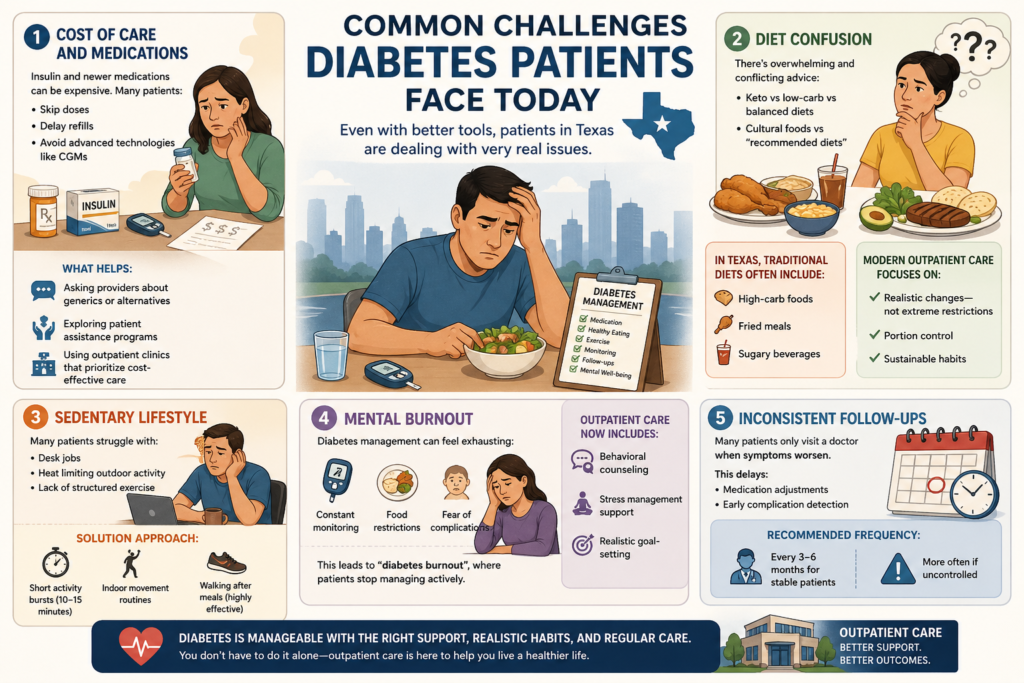
Common Challenges Diabetes Patients Face Today
Even with better tools, patients in Texas are dealing with very real issues.
What a Strong Outpatient Diabetes Plan Looks Like
An effective care plan isn’t complicated—but it must be consistent.
1. Regular Monitoring
- A1C test every 3 months (if uncontrolled)
- Blood pressure checks
- Lipid profile annually
2. Medication Adherence
Skipping doses—even occasionally—can lead to:
- Blood sugar spikes
- Long-term damage
3. Nutrition Strategy (Not a “Diet”)
Focus on:
- Balanced meals
- Fiber-rich foods
- Reduced sugary drinks
Small changes outperform extreme diets.
4. Physical Activity
Even modest movement helps:
- Improves insulin sensitivity
- Reduces glucose levels
- Supports weight management
5. Preventive Screenings
Outpatient care includes:
- Eye exams (retinopathy screening)
- Foot exams (nerve damage prevention)
- Kidney function tests
What is the most accurate test for diabetes?
The A1C test is considered highly reliable as it shows average blood sugar over time.
Do I need to fast for all diabetes tests?
No, only the fasting blood sugar test requires fasting.
How often should I get tested for diabetes?
Every 1–3 years, depending on your risk factors.
Can diabetes be diagnosed in one test?
Usually, results are confirmed with a repeat test unless symptoms are clear.
Book an Urgent Consultation
Need immediate medical attention? Our team is ready to assist you quickly and efficiently. Schedule your urgent consultation now and get the care you need without delay.