
How Primary Care Physicians Evaluate Chronic Headaches
Many patients feel nervous before their first appointment for chronic headaches.
Some worry they’ll immediately need scans or extensive testing. Others fear their symptoms won’t be taken seriously. Many simply don’t know what to expect.
The reality is that evaluating chronic headaches is usually a thoughtful, step-by-step process, often starting with a structured healthcare consultation where symptoms and history are carefully reviewed.
Primary care physicians are often the first healthcare professionals patients see for recurring headaches. Their role is not only to help relieve symptoms but also to understand why the headaches are occurring and whether additional testing or specialist care is needed.
If you’ve ever wondered what actually happens during a headache evaluation, this guide will walk you through the process.
The Goal of a Headache Evaluation
When patients arrive complaining of recurring headaches, physicians are not simply trying to measure pain levels.
Instead, they are trying to answer several important questions:
- What type of headache is occurring?
- How often is it happening?
- Is there an identifiable pattern?
- Could another medical condition be contributing?
- Are additional tests necessary?
- What treatment approach is most appropriate?
In some cases, underlying conditions such as normocytic anemia overview or metabolic issues identified through lab services may be explored if symptoms suggest broader systemic involvement.
Step One: Reviewing Your Medical History
The medical history is often the most important part of the entire appointment.
Patients are sometimes surprised by how many questions physicians ask before performing any examination.
That’s because headache patterns often provide critical diagnostic clues.
Common questions include:
- When did the headaches begin?
- How frequently do they occur?
- How long do they last?
- Have symptoms changed recently?
- What makes them better or worse?
- Do headaches interfere with daily activities?
These discussions often take place alongside general healthcare consultation, where physicians begin forming a clinical picture.
Understanding the Patient’s Headache Story
Doctors often focus on the overall story rather than a single headache episode.
For example:
A headache that has remained unchanged for years may be approached differently than one that appeared suddenly within the last month.
Physicians look for:
- Consistency
- Progression
- Triggers
- Changes over time
If neurological or systemic concerns arise, physicians may consider broader conditions sometimes associated with chronic illness presentations, including rare neurological conditions such as those discussed in rare mental disorders (when symptom overlap requires exclusion).
Discussing Current Medications
Medication review is an essential part of headache assessment.
Your physician will likely ask about:
- Prescription medications
- Over-the-counter pain relievers
- Vitamins
- Herbal supplements
Patients sometimes underestimate the importance of this step.Medication overuse headaches are a known concern, and in some cases patients being treated for chronic conditions like weight loss therapy or long-term treatments such as infusion therapy may require careful review of side effect
Performing a Physical Examination
After reviewing your history, the physician will perform a physical examination.
This examination is not solely focused on the head. Instead, it provides a broader view of your overall health.
The physician may assess:
- General appearance
- Vital signs
- Neck mobility
- Muscle tension
- Sinus tenderness
- Vision-related concerns
Some headache cases overlap with dermatologic or localized conditions, including scalp-related issues like skin cancer on scalp, where symptoms can occasionally mimic pain-related complaints.
Checking Blood Pressure
Blood pressure evaluation is a routine part of care and may be supported through regular monitoring during wellness exams.
Elevated blood pressure can sometimes be linked with headache symptoms and should not be overlooked.
Evaluating Sleep Habits
Sleep is closely connected to headache health.
For this reason, primary care physicians often spend considerable time discussing sleep patterns.
Questions may include:
- How many hours do you sleep?
- Do you wake up feeling rested?
- Do you snore?
- Do you wake frequently during the night?
- Do headaches occur upon waking?
In cases where fatigue or systemic illness is suspected, conditions like post-acute recovery states (e.g., post acute care services) may also be considered in broader health evaluation contexts.
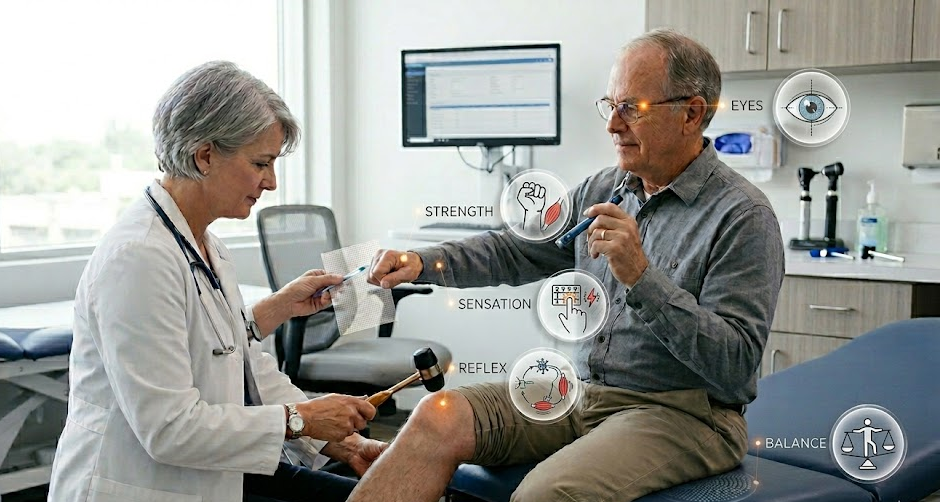
The Neurological Examination
Hearing the term “neurological examination” can sound intimidating, but it is typically straightforward.
The purpose is to assess how the nervous system is functioning.
A physician may evaluate:
Mental Status: Assessing alertness, orientation to time and place, and cognitive function.
Cranial Nerves: Testing vision, eye movement, facial sensation, and hearing.
Motor Function: Observing muscle strength, tone, and the presence of involuntary movements.
Reflexes: Checking deep tendon reflexes to ensure the peripheral nerves and spinal cord pathways are intact.
Coordination and Gait: Evaluating balance, walking patterns, and the ability to perform precise movements.
Sensory Perception: Testing the ability to feel light touch, pain, and temperature across different areas of the body.
When Laboratory Tests Are Ordered
Not every headache patient requires laboratory testing.
However, physicians may recommend common lab tests when they suspect an underlying health issue could be contributing.
Examples include evaluating for:
- Anemia
- Thyroid abnormalities
- Metabolic concerns
- Nutritional deficiencies
- Inflammation
Laboratory testing is often used to gather additional information rather than confirm a headache diagnosis directly.
Why Imaging Is Not Always Necessary
Many patients assume they will automatically need a CT scan or MRI.
In reality, imaging is not routinely required for every chronic headache.
Most recurring headaches can be evaluated effectively through history, examination, and clinical assessment.
Imaging is generally considered when:
- Symptoms have changed significantly
- Unusual neurological findings are present
- New headache patterns develop suddenly
- Additional investigation is needed
This targeted approach helps avoid unnecessary testing while ensuring appropriate care.
When MRI or CT Scans May Be Recommended
If imaging becomes necessary, the decision is based on specific clinical findings.
The goal is not simply to “look around” but to answer a particular medical question.
Primary care physicians determine whether imaging is appropriate based on the information gathered during evaluation.
When needed, imaging provides another layer of information that helps guide treatment decisions.
Creating an Individualized Care Plan
Once the evaluation is complete, the physician develops a management strategy tailored to the patient.
This may include:
- Lifestyle recommendations
- Trigger identification
- Sleep improvements
- Medication adjustments
- Follow-up monitoring
The plan depends on the findings of the evaluation rather than a one-size-fits-all approach.
When a Referral to Neurology Is Appropriate
Primary care physicians manage many headache conditions successfully.
However, some situations benefit from specialist involvement.
Referral to a neurologist may be considered when:
- Diagnosis remains unclear
- Symptoms are unusually complex
- Headaches continue despite treatment
- Specialized testing is needed
- Advanced headache management is required
Referral does not necessarily indicate a serious problem. Often, it simply provides access to additional expertise.
FAQs
What foods trigger migraine headaches?
Common triggers include chocolate, aged cheese, caffeine, processed meats, and foods with MSG or artificial sweeteners. These can affect brain chemicals and blood flow in sensitive individuals.
What is the fastest way to stop a tension headache?
The quickest relief usually comes from hydration, gentle neck stretching, and an over-the-counter pain reliever if needed. Resting in a quiet, low-light room can also reduce muscle tension.
What vitamin deficiency causes migraine?
Low levels of magnesium, vitamin B2 (riboflavin), and vitamin D are commonly linked with increased migraine frequency. These nutrients help regulate nerve and brain function.
Why am I having serious headaches every day?
Daily headaches can be linked to chronic stress, poor sleep, dehydration, medication overuse, or underlying conditions. If it persists, it’s important to evaluate lifestyle triggers and consult a healthcare professional.
Book an Urgent Consultation
Need immediate medical attention? Our team is ready to assist you quickly and efficiently. Schedule your urgent consultation now and get the care you need without delay.