
Can Allergies Cause Wheezing? Causes, Symptoms & When to See a Doctor
Yes, allergies can cause wheezing. Most people link allergies to a runny nose and itchy eyes, so a whistling sound in the chest can come as a surprise. But the same immune reaction that inflames the nose can also affect the smaller airways in the lungs. At Preferred Primary Care in Bedford, Texas, we see this often in patients who assume their breathing trouble has nothing to do with allergies. This article explains how allergy-related wheezing happens, what it tends to look like, and how it is confirmed.
If you are also dealing with a lingering cough, our guide on wheezing and coughing covers the wider range of respiratory causes. For seasonal triggers specific to our area, see our fall allergies in North Texas article.
How Allergies Can Trigger Wheezing
The nose and lungs are connected by one continuous airway lining, and inflammation in one area often influences the other. When you inhale an allergen you are sensitized to, immune cells release histamine and other inflammatory chemicals. In the lower airways, this can cause three things at once:
- The airway muscles tighten
- The lining swells
- Mucus production increases
Air then has to squeeze through narrower passages, which produces the whistling sound of wheezing. Because the airways are already inflamed, they can also become more reactive to other irritants such as cold air, smoke, and strong fragrances.
Clues That Your Wheezing May Be Allergy-Related
For many people, allergy-related wheezing is a sign of allergic asthma, where allergen exposure repeatedly triggers airway inflammation. Allergic asthma often begins in childhood, but it can develop in adulthood too, sometimes after years of having only nasal allergy symptoms.
Having allergies does not mean you will develop asthma. But frequent nasal allergy symptoms, a personal or family history of eczema or asthma, and a known sensitivity to indoor allergens all raise the likelihood that wheezing has an allergic component.
Why You May Wheeze Without Typical Allergy Symptoms
Allergy-related wheezing tends to follow patterns that point to a trigger. You might notice:
- Wheezing that starts within minutes to hours of exposure to a specific place, season, animal, or activity
- Chest tightness or shortness of breath alongside sneezing, itchy eyes, or postnasal drip
- Symptoms that flare in dusty rooms, during housecleaning, or around pets
- Breathing that worsens at night or first thing in the morning, which can reflect bedroom allergens such as dust mites
- Symptoms that ease when you leave the trigger environment, such as after a trip away from home
Wheezing Without Obvious Nasal Symptoms
Allergy-related wheezing does not always come with sneezing or congestion. In some people, the lungs react more strongly than the nose, so the only noticeable signs are a tight chest, a whistling breath, or exertional breathlessness. This is one reason the cause is often overlooked.
Indoor and Outdoor Triggers
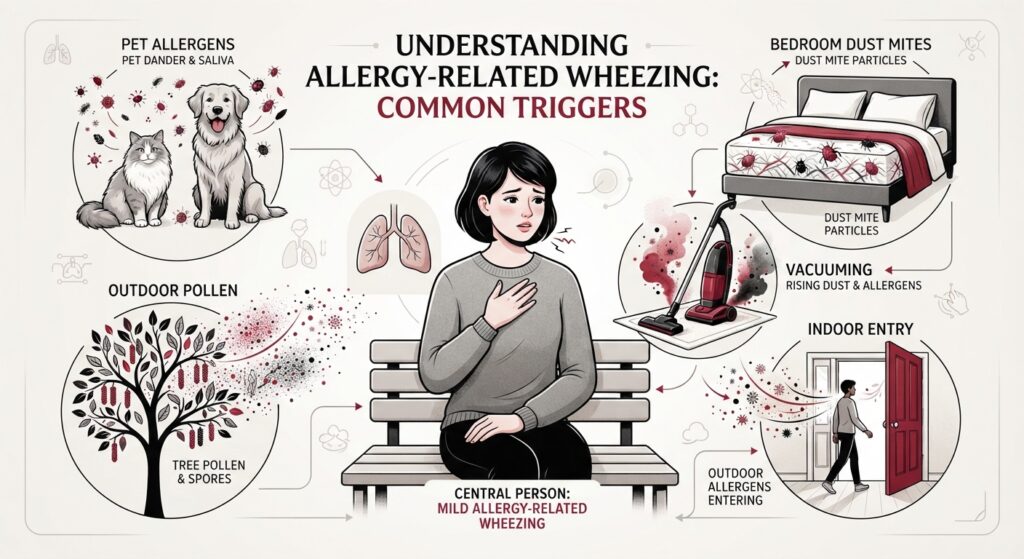
Indoor triggers can cause year-round symptoms:
- Dust mites
- Pet dander
- Cockroach droppings
- Indoor mold
Outdoor triggers tend to follow the calendar. They include tree, grass, and weed pollen and outdoor mold spores.
Weather can matter too. In some people, sudden storms stir up and break apart pollen into tiny particles that reach deep into the airways, which can bring on a sudden wheezing episode.
When Wheezing May Have Another Cause
Wheezing has many possible causes, and allergies are only one. Clinicians look for clues that tip the balance: a history of allergies, symptoms tied to exposure, wheezing that comes and goes, and a response to allergy or asthma treatment.
Features that make a non-allergic cause more likely include wheezing that is constant, begins after a fever or infection, or comes with chest pain, weight loss, or ankle swelling. A medical evaluation sorts this out.
How Doctors Determine Whether Allergies Are Involved
Your provider will start with a detailed history: when wheezing began, what seems to set it off, your home and work environment, and your family history. From there, evaluation may include:
- Spirometry, often repeated after an inhaled bronchodilator, to see whether narrowed airways open up
- Allergy testing by skin prick or blood test to identify specific sensitivities
- Additional tests if the picture is unclear, such as a chest X-ray to rule out other conditions
Confirming an allergic trigger matters because it shapes the plan. Our Allergy Clinic can pinpoint your triggers. If blood work is part of your evaluation, our guide to common lab tests and your health explains what to expect.
Treatment Depends on What Is Causing the Wheezing
Treatment usually has two parts: calming the airway inflammation and reducing what triggers it.
- Asthma medications, such as a quick-relief inhaler for flares and a daily controller medication for ongoing inflammation, are prescribed when asthma is part of the picture
- Trigger reduction, such as washing bedding in hot water, using allergen-proof mattress and pillow covers, and keeping pets out of the bedroom
- Immunotherapy, which may reduce allergic reactions over time in suitable patients
One caution: antihistamines treat nasal and skin allergy symptoms but are not a treatment for wheezing itself. If you are wheezing, don’t rely on them alone.
When Should You See a Doctor for Allergy-Related Wheezing?
Make an appointment with a primary care provider if:
- You wheeze more than occasionally, even if it seems mild
- Wheezing wakes you at night or limits exercise
- You rely on a rescue inhaler more often than your provider recommends
- Allergy medicines relieve your nose but not your chest
If you don’t yet have a regular doctor, our guide on how to find a primary care doctor can help you get started. If your symptoms seem to flare mainly at work, our corporate and professional primary care services support working professionals.
FAQs
Can allergy-related wheezing happen without sneezing or congestion?
Yes. Allergic inflammation can be concentrated in the lungs, so some people notice only chest tightness, a whistling breath, or breathlessness with activity. Because there are no nasal symptoms, the allergic cause is often missed until testing is done.
Why does my wheezing get worse at night or in bed?
Bedrooms collect dust mites, pet dander, and mold, and you breathe those allergens in for hours. Airways are also naturally more reactive overnight and in the early morning. Together, these can make nighttime wheezing a useful clue to an allergic trigger.
Will an antihistamine stop allergy-related wheezing?
Usually not on its own. Antihistamines help with sneezing, itching, and runny nose but do not reliably relax or reduce inflammation in the lower airways. If you are wheezing, a provider can recommend treatment that targets the lungs.
Can I develop allergy-related wheezing as an adult if I never had asthma before?
Yes. Allergic asthma can start later in life, sometimes after a move, a new pet, or a change in your environment. New wheezing in adulthood deserves an evaluation rather than being written off as a lingering cold.
What should I track before my appointment for wheezing?
Note when wheezing occurs, what you were doing or breathing in beforehand, whether it is worse at night, and how you respond to any medicines. Photos or notes of your home environment, such as pets, bedding, and visible mold, can also help. For more ideas, see our list of top questions to ask during your doctor visit.
Book an Urgent Consultation
Need immediate medical attention? Our team is ready to assist you quickly and efficiently. Schedule your urgent consultation now and get the care you need without delay.